
Where to Live in Ada, MI: Find the Right Fit for Your Routine
Your shortlist might include one home close to village activity, one in an established neighborhood, and one with more land. That is useful if you compare how each fits your routine instead of treating the labels as winners and losers. Our upcoming Pros & Cons of Living in Ada guide will explore the bigger community-wide tradeoffs. If you are also considering another nearby market, see our Ada versus East Grand Rapids comparison.
If you tell us you want to move to Ada, one of our first questions will be, “What do you want your ordinary Tuesday to look like?”
Do you picture walking to dinner or a weekend coffee, coming home to a residential neighborhood with opportunities to get to know your neighbors, or looking out your kitchen window at a wooded backyard? Perhaps you want space around your home without making every trip to Grand Rapids complicated. All of those preferences can point toward Ada, but not toward the same streets or properties.
The best part of Ada for you depends less on a particular subdivision name and more on how you want to live. Start with your priorities, then compare the actual homes and streets that meet them.
This guide starts with three residential settings: the Ada Village area, established neighborhoods, and wooded or rural properties. Then we will look at a factor that cuts across all three: the roads and routes you use every day. These are home-search categories, not official boundaries or guarantees about any specific property.
Ada at a Glance: Three Residential Settings
| Your priority | Where to start looking | What to check carefully |
| Restaurants, shops, parks, and a village atmosphere | Homes in or near Ada Village | Whether your specific home has a safe, practical walking route |
| A familiar residential setting and neighborhood streets | Established subdivisions and residential areas | Lot size, HOA rules, road layout, and trail connections |
| Trees, privacy, room for hobbies, or acreage | Wooded and rural parts of Ada Township | Driveway, utilities, maintenance, internet, and land restrictions |
Ada Township’s 2023 Master Plan uses four planning character areas: Village, Neighborhood, Rural Preserve, and Corridors. The plan’s chapter headings sometimes use “Neighborhoods,” while its executive summary and map use “Neighborhood.” The three residential settings below are our own way of organizing a home search; they do not reproduce the plan’s mapped boundaries, and one property may have features of more than one setting. Transportation access is discussed separately.
1. Near Ada Village: For Convenient Access to Shops, Dining, and Public Spaces
Ada Village has changed considerably through its redevelopment. The compact center has restaurants, shops, public spaces, and places to meet friends. To orient yourself on a map, start around Ada Drive, River Street, and Headley Street, near the Thornapple River and the historic Ada Covered Bridge. Those streets are geographic reference points for the village core, not a boundary for every home someone may describe as “near the village.”
This is the setting to investigate first if you imagine grabbing coffee, going out for dinner, spending time at Legacy Park, or attending a community event without making a long drive. Depending on the home and your mobility needs, some trips may be walkable or bikeable.

But living near the village is not the same as living within an easy walk of everything. A listing can describe itself as “minutes from downtown Ada” while still requiring a car for nearly every outing. Sidewalk gaps, intersections, traffic, weather, and the actual route matter more than a map’s straight-line distance.
What kinds of homes might you find?
The broader village area includes a mix of older houses, updated homes, and newer or attached housing options. Individual choices vary with inventory, and the most convenient locations will not always offer the largest lots or the greatest separation from neighbors.
Ask yourself whether you would trade some yard space or privacy for a shorter trip to the places you use regularly. If the answer is yes, this could be the right starting point.
Try this before buying: Park near a home you like and walk the route you expect to use, at the time of day you would actually use it. A pleasant Saturday stroll is not always the same as an everyday trip in winter.
2. Established Ada Neighborhoods: For a Residential Setting Beyond the Village
Not everyone wants a downtown-adjacent home, and not everyone wants acreage. A substantial part of Ada’s appeal lies between those extremes: established neighborhoods with detached houses, residential streets, mature landscaping, and a more residential setting away from the village’s commercial core. Start your map search in the southwestern part of Ada Township, where its master plan identifies a concentration of established neighborhoods.
This is a good category to explore if you want a driveway and yard, a recognizable neighborhood layout, and a home that feels connected to other homes without being in the middle of the village. Some areas have sidewalks or pathway access; others require driving for most everyday trips. Some properties have rules set by a homeowners association (HOA); others do not.
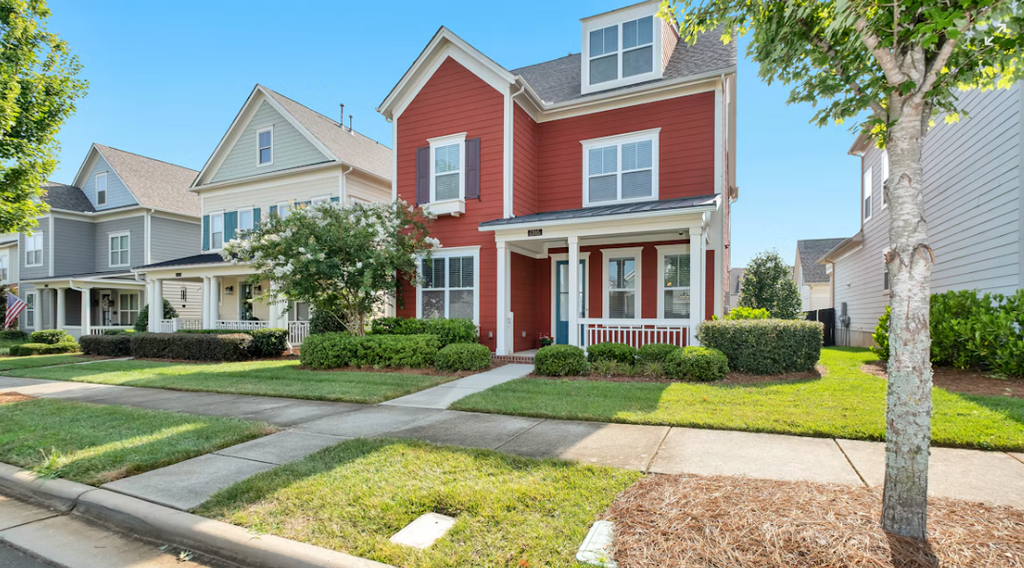
For concrete examples to research, the township’s 2023 Master Plan names Adacroft Commons, between Ada Drive and Fulton Street, and Clements Mill, farther west, as established subdivisions. These are geographic examples, not rankings or promises that a home will meet your needs. The plan describes neighborhoods between Ada Drive and Cascade Road as having earlier development histories, too. The housing stock can differ considerably from one street to another. One property may offer a traditional floor plan and well-developed landscaping, while another has been extensively renovated. Buying into an established neighborhood may mean accepting a layout or lot shape you would not choose from scratch, but it can also mean seeing exactly how the surroundings have matured.
Look beyond the home’s interior
When comparing properties, pay attention to the relationship between the house and its street. Is the road busy at school pickup time? Is the backyard visible from several neighboring houses? Are there sidewalks or usable shoulders? Are the streets maintained publicly or privately? What does the neighborhood sound like on a weekday evening?
If you love the idea of a more established residential setting but also want access to trails and Ada Village, test the connection from the specific address rather than assuming all Ada neighborhoods are equally connected.
Try this before buying: Visit twice, once during a quiet period and once during a typical weekday. Drive your usual errands and check whether the neighborhood delivers the convenience and atmosphere you imagined.
3. Wooded and Rural Ada: For Privacy, Nature, and More Room to Spread Out
The wooded, rural side of Ada can feel quite different from the village center. Start by looking at the northern and eastern portions of Ada Township, including areas around Pettis Avenue, Honey Creek Avenue, and stretches of Grand River Drive. The township’s master plan locates much of its Rural Preserve character area there, including woodland, larger residential parcels, natural open space, and some agricultural land. These roads are orientation points, not guarantees that every nearby lot is rural or heavily wooded.

If you value a more expansive view from the back porch, room for a garden, a workshop, or extra distance between homes, this is the part of the search that may get your attention. You may encounter properties with larger lots, winding drives, sloped terrain, wooded surroundings, and more varied home styles.
That space can be wonderful, but it is not maintenance-free. More trees mean more leaves and possible storm cleanup. A long or steep driveway brings snow-removal questions. A large lawn takes time and money. Drainage, wetlands, easements, and local land-use rules may limit what you can do with a parcel.
The hidden questions that come with extra land
Do not assume that a rural-looking home has the same services as one closer to the village. Before you become attached to the acreage, confirm the actual setup for water and wastewater, heating fuel, broadband access, driveway maintenance, and emergency access. Some properties have public utilities; others may rely on private systems. There is no dependable shortcut based only on lot size or ZIP code.
Similarly, trees and natural features can affect how you use the property. A beautiful wooded setting does not automatically mean you can clear additional space, build an outbuilding, or add a second driveway. Review restrictions, permits, and site conditions first.
Try this before buying: With the seller’s permission, walk the accessible parts of the property, not just the maintained area near the house. Ask how it functions after heavy rain and during winter, and confirm which ongoing jobs would fall to you.
Then Compare Your Everyday Routes
A home near the village, in an established neighborhood, or on wooded acreage can all be convenient, or inconvenient, for your particular schedule. Transportation access is not a fourth neighborhood type. It is the next test after you choose the residential setting that appeals to you.
The township’s 2023 Master Plan identifies Fulton Street (M-21) and Cascade Road as major corridors, but for buyers the practical question is simpler: Which roads will you actually use? Straightforward access may save time, while a house near a busy road can bring traffic noise, difficult left turns, driveway-access concerns, or intersection delays.
This is less about choosing one defined neighborhood and more about mapping your actual routines. Two appealing homes that look similarly located on a regional map may produce noticeably different daily trips, especially when school traffic, intersections, or a river crossing are involved.
Consider the places you travel to repeatedly: your workplace, grocery store, childcare, medical appointments, favorite parks, and the people you visit. Then drive those trips from each candidate property. The shortest trip on paper is not always the easiest route to live with.
Try this before buying: Test the route you use most during your normal travel time. Also assess road noise, sightlines, and driveway access from a safe, permitted location.
How to Choose Your Ada Fit: Start With These Five Questions
Before opening another listing, rank these five considerations. They can help us narrow the search much faster than filtering only by bedrooms and square footage.
How often do you want to walk somewhere?
If the answer is several times a week, focus on the exact walking network around Ada Village and other connected locations. If you are happy driving for coffee but want a quiet yard, your options expand considerably. Remember that a trail nearby is not necessarily a direct route to shops or school.
How much property upkeep do you actually want?
Privacy and a larger lot come with responsibilities. A smaller yard may leave more time for enjoying parks or travel. Think about gardening, mowing, snow removal, tree work, and whether you would prefer a property with shared exterior maintenance.
Which trips shape your week?
A location can be ideal for weekend recreation and inconvenient for daily appointments. List your three most frequent destinations and compare routes from actual homes. If you work from home, check internet service and your need for a dedicated workspace rather than treating commuting time as the only factor.
What kind of home feels right to you?
You may prefer an established house with mature landscaping, a lower-maintenance attached home, or something with newer systems and a more open layout. Those preferences often cut across Ada’s lifestyle categories. Our separate guide to buying or building a new home in Ada covers the construction decision in more detail.
What is your complete ownership budget?
Purchase price is only the starting point. Taxes, insurance, utilities, potential association dues, and routine maintenance can look quite different from one property to another. For a practical breakdown, see our guide to the cost of living in Ada, MI [LINK PLACEHOLDER].
One Important Detail: An Ada Address Is Not Always Ada Township
Before comparing taxes, schools, services, or land-use rules, confirm the property’s municipality and parcel details.
An Ada mailing address does not necessarily mean the home is within Ada Township. The municipality, school district, and taxing jurisdictions are determined by the specific parcel, not simply by the city name in the mailing address. The distinction can affect taxes, services, school assignment, and what rules apply to the property.
For schools, confirm the school district and any applicable school attendance boundaries directly with the district. For taxes, evaluate the parcel’s applicable jurisdictions and get a realistic estimate for your ownership, rather than assuming the current owner’s tax bill will carry over unchanged.
This is one reason we encourage buyers to compare homes individually rather than treating “Ada” as one uniform category.
A Simple Way to Explore Ada Before Choosing a Neighborhood
You can learn a lot about Ada in one afternoon, but the goal should be to test your routine, not to take a greatest-hits sightseeing tour.
Start in Ada Village. Walk around the shops and public spaces, then picture how often you would actually use them. Take a look at Legacy Park and the river area to get a sense of the village’s gathering places.
Next, explore some residential streets southwest of the village. Notice home spacing, landscaping, and walking routes. Then compare those surroundings with a wooded or rural property setting in the northern or eastern township. Do not treat any particular street as a stand-in for the entire area.
If outdoor access is a priority, visit Roselle Park and look up the actual trail and driving connections from homes on your shortlist. For additional context, May Group has an Ada parks article, but check current township park updates before relying on any dated construction descriptions.
Use the afternoon visit to build a shortlist, then return at the times that matter to your routine.
Make Your Ada Shortlist Work for You
Your shortlist might include one home close to village activity, one in an established neighborhood, and one with more land. That is useful if you compare how each fits your routine instead of treating the labels as winners and losers. Our upcoming Pros & Cons of Living in Ada guide will explore the bigger community-wide tradeoffs. If you are also considering another nearby market, see our Ada versus East Grand Rapids comparison.
Frequently Asked Questions About Where to Live in Ada, MI
Is Ada Village walkable?
The village center was designed to support pedestrian activity, with shops, restaurants, and public spaces clustered together. Whether a particular home offers practical walkability depends on its distance, sidewalks, crossings, and your preferred destinations. Check the route rather than relying on a listing description.
Are there wooded properties in Ada, Michigan?
Yes. Ada Township includes rural and wooded residential settings as well as more conventional residential neighborhoods. Lot sizes, restrictions, topography, and utility arrangements vary, so evaluate each parcel individually.
Does every Ada home have access to the same schools?
No. School assignments depend on district boundaries and the specific address. An Ada mailing address alone does not establish the school district. Confirm school information directly before making a buying decision.
Is it better to live near Ada Village or farther out?
Neither is universally better. Near-village locations may make local businesses and gathering places easier to reach, while farther-out properties can offer more space or privacy. Your preferences for walking, driving, home style, and maintenance should determine which tradeoff works for you.
Can I find a neighborhood feel without living directly in Ada Village?
Yes. Ada’s established residential areas offer an alternative between the village center and rural acreage. Compare the specific street, lot, association rules, and trail connections because the experience differs by neighborhood.
Find the Right Home, Not Just the Right Label
The more specific you get about how you want to spend a normal week, the easier it becomes to find your place in Ada. A house that photographs beautifully is only part of the decision. The setting around it determines how the home works when you are rushing out the door, walking the dog, meeting friends, or heading home after a long day.
At May Group Realtors, we can help you compare the living environments within Ada, verify important property details, and find homes that match your budget and daily routine. Start by browsing homes for sale in Ada or reach out to our team to talk through what matters most to you.