The Pros and Cons of Living in Grand Rapids, Michigan: A Local Realtor’s Guide
Grand Rapids keeps showing up on national lists: best places to live, best cities for young professionals, best Midwest cities for families. At this point, that recognition is not really a surprise to anyone who lives here. What those lists tend to miss, though, is the nuance. Grand Rapids is genuinely great for a lot of people. It is also genuinely not the right fit for everyone.
We have helped hundreds of buyers relocate to Grand Rapids and West Michigan, and the conversations we have before someone moves are just as important as the ones we have during the home search. The right city matters as much as the right house. So we put together an honest look at both sides: the things locals love about Grand Rapids, and the things newcomers should prepare for before they pack a moving truck.
If you are thinking about relocating to Grand Rapids, this guide is for you.
Quick Snapshot: Is Grand Rapids a Good Place to Live?
For most people asking this question, the short answer is yes, with some important asterisks.
Grand Rapids is a mid-sized city of roughly 200,000 people, with a metro area of over 1.1 million. It sits 30 minutes east of Lake Michigan, about two and a half hours from both Chicago and Detroit, and it delivers a quality of life that legitimately competes with cities twice its size. Strong restaurants, a nationally recognized brewery scene, growing job opportunities, real neighborhood variety, good parks, and a housing market that is still more attainable than many larger metros.
The asterisks: winters here are real. Public transit is limited. Some neighborhoods are far more car-dependent than others. And the housing market, while more approachable than coastal cities, has gotten more competitive in recent years.
Here is how the ledger breaks down at a glance:
| Pros of Living in Grand Rapids | Cons of Living in Grand Rapids |
| Strong quality of life for a mid-sized city | Cold, snowy, and very cloudy winters |
| More affordable than many larger metros | Competitive housing market in desirable areas |
| Exceptional food, beer, and entertainment scene | Public transportation is limited |
| Great outdoor access, close to Lake Michigan | Walkability varies widely by neighborhood |
| Real neighborhood variety for different lifestyles | Growing pains: rising prices, more traffic |
| Strong healthcare, manufacturing, and tech jobs | Smaller airport, fewer big-city amenities |
| Significant downtown development momentum | May feel small coming from a major metro |
The Pros of Living in Grand Rapids, Michigan
Pro #1: Grand Rapids Offers a Strong Quality of Life Without Feeling Too Big
This is probably the thing we hear most from buyers who move here from larger cities: Grand Rapids is surprisingly complete. Not in the sense that it has everything (it does not), but in the sense that the things that make daily life good are genuinely here. Good restaurants. Healthcare you can trust. Events worth going to. Neighborhoods with real character. A farmers’ market that actually competes with anything you would find in a much larger city.
At the same time, it is still a city where you can get across town in 20 minutes. Where parking is not a second job. Where you can get a reservation at a great restaurant the week you want it, not three months out. Grand Rapids sits in an interesting sweet spot: enough city to feel alive, small enough to feel human.
For many buyers we work with (especially those relocating from Chicago, Columbus, or the coasts), Grand Rapids feels like the right balance. They are not giving things up. They are trading one set of trade-offs for another set that happens to suit them better.
Pro #2: Grand Rapids Is Still Relatively Affordable Compared to Larger Metros
Let us be clear about something: Grand Rapids is not cheap in the way some longtime locals remember it being. The market has moved. But compared to where most relocating buyers are coming from, it often still feels like a genuine exhale.
GRAR’s April 2026 data shows an average sale price of $418,969 for Kent County as a whole, up approximately 6.6% year over year. Numbers from Zillow show homes going under contract in roughly 10 days in competitive segments. That is a fast market. But it is also a market where a $300,000 home is real, not a starting bid for a studio condo.
Buyers relocating from Chicago, Seattle, or the Bay Area often find that their dollar stretches considerably further here, not just in housing but in daily expenses: groceries, utilities, dining, and overall cost of living tend to land at or below national averages. If you are making a similar salary and paying less for housing, that gap has a real impact on financial quality of life.
If you are already living locally and feeling the pressure of rising costs, that is real too, and we are not going to pretend otherwise. But on a relative basis, Grand Rapids continues to offer real value in a way that many comparably sized cities no longer can. Our cost of living breakdown goes deeper on the numbers if you want to compare specifics.
Browse current Grand Rapids homes for sale to get a live sense of what inventory looks like at different price points.
Pro #3: The Food, Beer, and Entertainment Scene Punches Well Above Its Weight
This section could go on for a while, so we will keep it focused: Grand Rapids should not have a food and drink scene this good for a city of 200,000 people, but it does.
Beer City USA is a real designation, and Founders Brewing alone would be a destination draw in almost any city. But the local brewing scene extends well beyond Founders. Brewery Vivant, Mitten Brewing, Greyline Brewing Co., and dozens of others have built something that consistently earns national coverage.

The restaurant scene has matured meaningfully over the past decade. MDRD, Butcher’s Union, San Chez Bistro, The Sovengard, Amore Trattoria, and Gin Gin’s have given Grand Rapids a genuinely ambitious dining culture, and the neighborhoods around Eastown, East Hills, and Bridge Street have filled in with independent coffee shops, cocktail bars, and neighborhood spots that feel discovered rather than manufactured. Madcap Coffee is the kind of place that people who care about coffee seek out when they visit.
ArtPrize, LaughFest, the Grand Rapids Symphony, the Grand Rapids Art Museum, Van Andel Arena, Frederik Meijer Gardens, and the new Acrisure Amphitheater events give the city a full cultural calendar. It is not New York. But for people who want a full life without needing a world-class city to provide it, Grand Rapids delivers.
Pro #4: Grand Rapids Has Real Neighborhood Variety
One of the things that genuinely differentiates Grand Rapids from smaller Midwest cities is that neighborhoods here actually feel different from each other: not just in price, but in character, lifestyle, and vibe.
Downtown Grand Rapids delivers walkability, condo living, riverfront access, and proximity to events, restaurants, and the arena district.
Eastown and East Hills are where you go for walkable streets, independent restaurants, character homes, local shops, and a neighborhood energy that feels lived-in rather than curated.
Heritage Hill is one of the most architecturally significant neighborhoods in Michigan, with large Victorian and Arts & Crafts homes, a strong preservation ethic, and a downtown-adjacent location.
Alger Heights offers that classic neighborhood feel: block parties, front porches, local shops on Kalamazoo Avenue, and price points that attract both first-time buyers and buyers looking for community texture.
The West Side has developed significant energy around Bridge Street, with restaurants, breweries, and redevelopment activity that has made it one of the more interesting neighborhoods to watch.
Ada, Cascade, and Forest Hills offer a different lifestyle entirely: higher-end homes, excellent schools, space, and a suburban pace that still keeps you close to everything Grand Rapids offers.
Rockford, Byron Center, Caledonia, Grandville, and Kentwood provide suburban options at various price points for buyers who want more land, newer construction, or specific school districts without a long commute.
The point is: “I’m moving to Grand Rapids” is not a single decision. It is a starting point. Where within Grand Rapids matters enormously, and that is a conversation worth having early. See our full Grand Rapids communities guide for a deeper look at individual areas.
Pro #5: Outdoor Access Is One of Grand Rapids’ Biggest Lifestyle Advantages
Grand Rapids is not a beach town. But one of its real selling points is how quickly you can get to one. Grand Haven, Holland, and Saugatuck are all within 30 to 45 minutes. On a Friday afternoon in June, that matters more than it might seem when you are evaluating cities in the winter.
Within the city itself, the Grand River provides a backbone for trails and parks, and Millennium Park, Riverside Park, and Reeds Lake offer genuine outdoor escapes. Provin Trails gives hikers and mountain bikers a surprisingly technical trail system within city limits. Frederik Meijer Gardens and Sculpture Park is a legitimate destination, not just a local attraction.
For buyers relocating from cities without this kind of access, the combination of city amenities plus quick reach to Lake Michigan beaches, wine country near Fennville, ski hills in the winter, and the farmland and orchards of West Michigan is a quality-of-life factor that is hard to put a price on.
Pro #6: Grand Rapids Has Real Momentum and Development Energy
Cities are not static, and Grand Rapids is in a period of genuine transformation that is worth paying attention to if you are thinking about buying here.
Downtown Grand Rapids has seen major investment in recent years, including new residential development, mixed-use projects, and significant public infrastructure work. In February 2026, the City of Grand Rapids awarded a $14.56 million construction contract for the Grand River Revitalization Project, a significant milestone in the city’s effort to restore the namesake rapids that were buried decades ago and improve public access to the riverfront. A new riverfront amphitheater and soccer stadium are also part of the broader vision for downtown’s next chapter.
For buyers, development momentum matters. It speaks to economic confidence, job attraction, and long-term neighborhood value. Grand Rapids is not just a nice place to live now. It is a city that has consistently invested in becoming a better place to live, and that trajectory has been fairly steady for over a decade.
Pro #7: Grand Rapids Works for a Wide Range of Buyers and Life Stages
One of the things we appreciate about this market is that it is not narrowly suited to one type of buyer. It works for a lot of different people, at a lot of different life stages.
Families find strong neighborhood options, good suburban schools in districts like Forest Hills, Rockford, Hudsonville, and Byron Center, access to parks and kid-friendly activities, and a metro area that does not feel overwhelming to raise a family in.
Young professionals get a downtown that is actually active, a job market with genuine anchor employers in healthcare (Corewell Health, Trinity Health), manufacturing (Steelcase, Herman Miller), and a growing technology and design sector.
Remote workers often find that Grand Rapids offers a lifestyle upgrade: more space, lower housing costs, an active social scene, without the isolation of a smaller city.
Empty nesters and downsizers have real options in downtown condos, East Grand Rapids, or low-maintenance suburban communities, depending on what simplification looks like for them.
Luxury buyers find a meaningful high end in Ada, Cascade, East Grand Rapids, Forest Hills, and waterfront-adjacent properties that offer quality and privacy at prices that would be extraordinary in comparable coastal markets. Explore luxury homes in Grand Rapids to see what that end of the market looks like.
If you are thinking about a move and want to talk through where you might fit, our team provides area tours and local consultation as part of how we help buyers relocating to Grand Rapids.
The Cons of Living in Grand Rapids, Michigan
Con #1: Winters Are Cold, Snowy, and (This Part Is Real) Very Cloudy
We are not going to sugarcoat this one, because it is the most common reason people who move here from warmer states have a harder adjustment than they expected.
Grand Rapids winters are legitimately cold. Lake-effect snow from Lake Michigan can dump significant accumulation quickly, and the region averages over 70 inches of snow per year. But what surprises many newcomers more than the snow is the cloud cover. West Michigan winters are gray. Not occasionally gray: relentlessly gray for stretches that can run weeks at a time between December and March. Seasonal mood and vitamin D are real considerations.
How bad are winters in Grand Rapids? That depends partly on where you are coming from. If you grew up in the Midwest or Northeast, Grand Rapids winters will feel familiar and maybe even manageable. If you are relocating from the Sun Belt or a coastal warm-weather market, the adjustment can be significant.
The practical side: you will need all-season tires or all-wheel drive, a reliable snow blower or someone willing to shovel, and a wardrobe that actually accounts for real winter. Once you have those things sorted, winters here are genuinely livable. The summers, which are excellent, are partly what makes the winter worth it.
Con #2: The Housing Market Can Be Competitive
This is where we can add something that national articles cannot: what it actually feels like to buy in this market right now.
Zillow’s February 2026 data shows roughly one-third of Grand Rapids home sales closing above list price[a1] , with well-located, move-in-ready homes going under contract in days. Entry-level homes in strong school districts can attract multiple offers quickly, especially in the spring market.
What that means practically: buyers who show up without pre-approval, without clear priorities, or without an agent who knows neighborhood-level pricing are at a real disadvantage. It does not mean you cannot buy here (thousands of people do every year), but preparation matters. If you are relocating to Grand Rapids and planning to buy within a year, starting the conversation with a local agent earlier rather than later is worth doing.
That said, not every segment of the market feels equally competitive. New construction in suburban areas, certain price bands in the city, and less-trafficked neighborhoods all present different dynamics. A blanket “the market is hot” statement misses real nuance that affects what your experience will actually look like.
Browse current Grand Rapids homes for sale to see what inventory looks like across different price ranges and neighborhoods.
Con #3: Public Transportation Is Limited
Can you live in Grand Rapids without a car? In a few neighborhoods, you can get reasonably far on foot and use The Rapid, the city’s bus system, for the rest. In most of Grand Rapids, and certainly in the suburbs, a car is effectively required.
The Rapid operates bus routes and a Bus Rapid Transit line across the metro, and it is a functional system for people whose work and daily life are organized around it. But it does not compare to the transit infrastructure of Chicago, New York, or even a mid-sized city like Minneapolis in terms of frequency, coverage, or reliability during poor weather.
For buyers who are used to living car-light or car-free, this is worth thinking through before you fall in love with a specific neighborhood. If transit access matters to you, let your agent know upfront so your search stays focused in the right areas.
Con #4: Walkability Depends Heavily on Where You Land
Redfin scores Grand Rapids at 56 out of 100 on walkability overall, which means some neighborhoods work well on foot and others really do not. The city-level average masks significant variation.

Downtown, Eastown, East Hills, Heritage Hill, and pockets of the West Side near Bridge Street offer meaningful walkability for errands, dining, and daily life. Most of the eastern and southern suburbs (Cascade, Ada, Byron Center, Caledonia, Grandville) are designed around driving. That is not a criticism; many buyers specifically want that. It is just worth knowing before you commit to a neighborhood based on a map rather than a visit.
Our blog on walkable communities in and around Grand Rapids is a useful resource if this is a priority for you.
Con #5: Growth Comes with Real Trade-Offs
Grand Rapids has been growing steadily, and growth is generally a good thing. It brings more investment, more restaurants, more jobs, and more amenities. But it also means rising home prices, more traffic on key corridors like 28th Street and Cascade Road, more competition for housing, and in some cases, neighborhood character that evolves faster than longtime residents would like.
If you are buying with a 10-year horizon, this momentum is largely working in your favor. If you are buying with an expectation that the market will stay static or that the quiet character of a neighborhood will be preserved indefinitely, growth is worth factoring in honestly.
Con #6: It May Feel Small If You Are Coming From a Major Metro
This is worth saying directly rather than dancing around it.
Grand Rapids has a lot going for it, but it is not Chicago. It is not a city with a sprawling professional networking scene across every industry, an international-caliber airport with dozens of direct routes, or the cultural density of a major metro. Gerald R. Ford International Airport has improved its route network over the years, but you will still connect through Chicago, Detroit, or Atlanta for most destinations.
For some buyers, this is actually a feature. They are specifically leaving the pace, cost, and scale of a larger metro behind. For others (especially buyers with careers that require frequent travel, extensive professional networking, or regular access to big-city institutions), the limitations are real.
We would rather flag this honestly than have you discover it six months after moving. Grand Rapids earns its place on best-city lists by delivering exceptional value for a city of its size. “For its size” remains an important qualifier.
Con #7: Neighborhood Fit Matters More Than People Realize
This is the con that comes up most often in our conversations with buyers who moved here without enough research.
Grand Rapids is a city of meaningful differences between neighborhoods: in walkability, in school districts, in commute times, in price, and in vibe. A buyer who wants to walk to coffee and dinner may love Eastown and find Ada isolating. A buyer who wants land, privacy, and top-rated schools may love Cascade and find downtown stressful. A buyer whose priority is school district resale value is making a different calculation than a buyer whose priority is proximity to downtown.
Getting neighborhood fit wrong does not just affect lifestyle. It affects commute, school options, long-term home value, and whether you feel at home in the city you chose.
This is one of the most useful things a local agent can help you navigate before your search narrows. Talk with a local Grand Rapids Realtor before you decide on a neighborhood based on internet research alone. The nuance is worth a conversation.
Who Is Grand Rapids Best For?
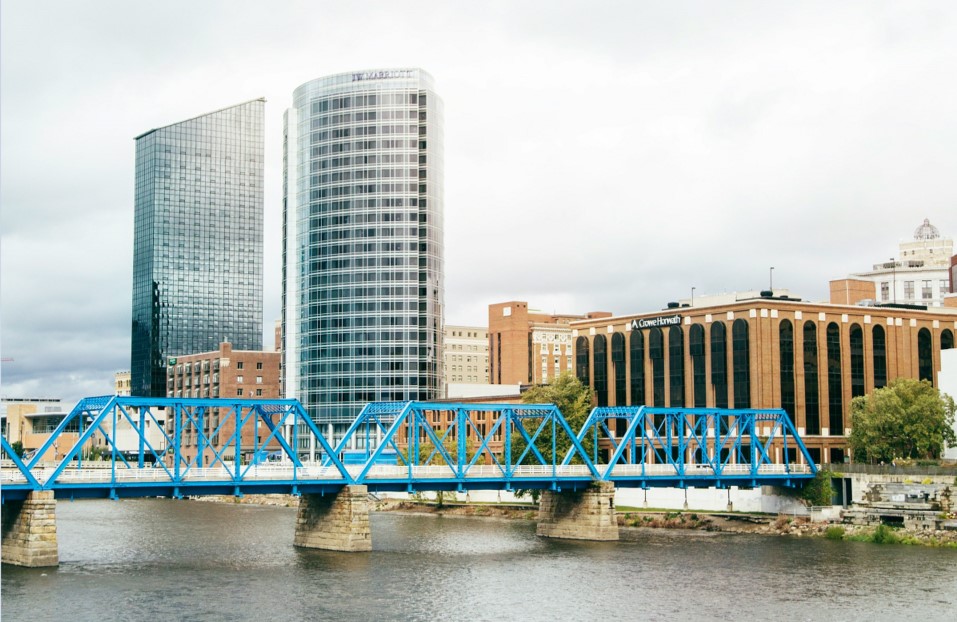
Grand Rapids May Be a Great Fit If You Want…
- A mid-sized city with real amenities and a manageable pace
- More house for your money than most larger metros offer
- Quick access to Lake Michigan, beaches, trails, and outdoor recreation
- An exceptional local food, beer, and coffee scene
- Neighborhood variety that lets you choose your lifestyle
- A genuine sense of local pride and community
- A city that works for families, young professionals, remote workers, and empty nesters alike
Grand Rapids May Not Be the Best Fit If You Want…
- Warm weather year-round and no winter driving
- A robust urban transit system where a car is optional
- A major international airport with wide direct route access
- A very dense, fast-paced urban lifestyle
- Absolute certainty that home prices will stay low
- No snow, no winter driving, and no seasonal weather swings
Best Areas to Consider When Moving to Grand Rapids
This is not a full neighborhood guide (we have those), but here is a practical framework for thinking about where to focus your search.
Best Areas for Walkability and City Living
Downtown Grand Rapids, Eastown, East Hills, Heritage Hill, and the West Side near Bridge Street are your best options if walkability, proximity to restaurants and events, and an active urban lifestyle are priorities. These neighborhoods have the most diverse housing types close together, from historic homes and bungalows to downtown condos and loft-style apartments.
Best Areas for Suburban Space Near Grand Rapids
Ada, Cascade Township, Forest Hills, Rockford, Byron Center, Caledonia, Grandville, and Kentwood offer suburban living at a range of price points with varying access to the city. Each has a distinct character. Rockford’s downtown feels like a Midwest storybook. Ada has trails and a village center. Cascade and Forest Hills tend toward newer construction and higher-end finishes. Our full communities guide has individual breakdowns for each area.
Best Areas for Luxury Homes Near Grand Rapids
East Grand Rapids, Ada, Cascade, and Forest Hills represent the high end of the market. East Grand Rapids sits adjacent to Reeds Lake and close to downtown. Ada and Cascade offer acreage, privacy, and newer executive construction. For buyers looking at the upper end of the market, explore luxury homes in Grand Rapids for a sense of what is available.
Best Areas for First-Time Buyers
Affordability varies significantly by neighborhood and price band, and “affordable” is increasingly relative in a market where typical home values have risen meaningfully. That said, buyers exploring entry-level options often compare Wyoming, Kentwood, Alger Heights, the West Side, and parts of Northwest Grand Rapids, as well as some of the closer-in suburbs. The calculus changes quickly based on budget, school district priorities, and commute requirements, which is exactly why this is worth a detailed conversation rather than a list. Our best Grand Rapids suburbs guide is a good place to start comparing options.
So, Should You Move to Grand Rapids?
For a lot of people, yes. Grand Rapids offers a combination of affordability, quality of life, community, job access, and outdoor recreation that is genuinely hard to find in many comparably sized cities. It is a city with real local pride, a food and beer scene that earns national coverage for good reason, neighborhoods with genuine character, and a long runway of investment and development ahead of it.
But the right answer depends on your specific situation: your budget, your career, your commute tolerances, your school priorities, your lifestyle, and (let us be honest) how you feel about a gray January. “Grand Rapids is a great city” and “Grand Rapids is the right city for me” are two different statements, and the gap between them is worth exploring before you commit.
If you are thinking about relocating to Grand Rapids or comparing neighborhoods and suburbs, the team at May Group Realtors can help you understand the market, tour communities, and narrow your search based on what actually matters to you. We live here. We work here. And we have had these conversations enough times to know that the best move starts with the right questions.
FAQs About Living in Grand Rapids, Michigan
Is Grand Rapids, Michigan a good place to live?
Yes, for many people. Grand Rapids offers a mid-sized city experience with strong restaurants, arts, outdoor access, job opportunities, and a housing market that remains more attainable than many larger metros. It may not be the best fit for people who strongly dislike winter, need a major-city transit system, or want a larger metropolitan feel.
What are the biggest pros of living in Grand Rapids?
Quality of life, relative affordability, an exceptional food and brewery scene, access to outdoor recreation and Lake Michigan, strong neighborhood variety, healthcare and job opportunities, and a growing downtown with real development momentum.
What are the biggest cons of living in Grand Rapids?
Cold, cloudy, and snowy winters (particularly the extended cloud cover that West Michigan’s lake-effect weather pattern produces), a competitive housing market in desirable areas, limited public transportation compared to larger cities, and significant car dependence in most neighborhoods outside of the urban core.
Is Grand Rapids expensive to live in?
It is more expensive than it was five years ago, but it remains more affordable than most larger metros. Zillow’s March 2026 data shows a typical home value around $303,298[a2] , with homes going under contract quickly in competitive segments. Daily living expenses including groceries, utilities, and dining generally track at or below national averages. For a full breakdown, read our cost of living guide.
Do you need a car in Grand Rapids?
Most residents will find life significantly easier with a car. The Rapid provides bus service throughout the metro, and some inner-city neighborhoods offer meaningful walkability, but Grand Rapids is not built around transit the way larger cities are.
How bad are winters in Grand Rapids?
They are legitimately cold and snowy, with lake-effect snow accumulation well above national averages. The gray cloud cover from November through March is often what surprises newcomers most. If you are relocating from a warm-weather state, plan for a meaningful adjustment period the first winter.
Is Grand Rapids good for families?
It can be a strong fit, thanks to neighborhood variety, parks, strong school districts in surrounding suburbs like Forest Hills, Rockford, and Byron Center, excellent healthcare access, and a metro area that is easy to navigate with kids. Families should research school districts specifically, since options vary significantly by neighborhood.
What are the best neighborhoods in Grand Rapids?
The best neighborhood depends entirely on lifestyle priorities. Downtown, Eastown, East Hills, Heritage Hill, and the West Side offer city living with walkability and neighborhood character. Ada, Cascade, Forest Hills, Rockford, Byron Center, and Caledonia are common comparisons for buyers seeking suburban space and school access. Browse all Grand Rapids communities to compare.
Is Grand Rapids a good place to buy a house?
It can be, depending on your timeline and goals. The market remains competitive in desirable segments, so buyers benefit from being pre-approved, clear on priorities, and working with an agent who understands neighborhood-level pricing. The long-term fundamentals (job growth, downtown investment, population momentum) support the case for buying in Grand Rapids if it is the right lifestyle fit. Talk with our team if you want a straight conversation about what buying here looks like right now.
May Group Realtors is a RE/MAX team based in Grand Rapids, Michigan. We specialize in helping buyers and sellers navigate the West Michigan real estate market, including buyers relocating from out of state who want a local team that actually knows the neighborhoods, not just the zip codes.
Contact May Group | Search Grand Rapids Homes for Sale | Relocating to Grand Rapids?